The Reserve Bank of India (RBI) will launch the Unified Lending Interface (ULI) nationwide in due course, aiming to transform India's lending sector, similar to how the Unified Payments Interface (UPI) revolutionised the payments ecosystem, Governor Shaktikanta Das said on Monday.

Eying benefits from digital banking, lenders are now looking at building Unified Recovery Interface (URI) for enhancing efficiency, reducing costs, and getting good prices for properties of defaulters. This would be managed by PSB Alliance Ltd, a company set up by all public sector banks in the country. M V Rao, chairman, Indian Banks' Association (IBA), said: "Till now we had Unified Payments Interface (UPI), a product developed by National Payments Corporation Ltd (NPCI).

Reserve Bank of India (RBI) Governor Sanjay Malhotra stated that preventing second-round effects of supply shocks, where inflation expectations rise due to prolonged disruptions, is the primary role of monetary policy. He also defended the RBI's foreign exchange market interventions, asserting it did not commit to an 'indefensible peg'.

It will enable real-time intel sharing among banks and other financial sector participants to strengthen customer protection against digital fraud.

Reserve Bank Governor Sanjay Malhotra on Wednesday exhorted the fledgling fintech ecosystem to focus on the underserved sections of the society to deepen financial inclusion. Speaking at the annual Global Fintech Fest in Mumbai, Malhotra accepted that serving the "privileged" will be a lucrative business, but urged the smaller companies to focus on the underserved.

Reserve Bank Governor Shaktikanta Das on Thursday said the fundamental drivers of the Indian economy are gaining momentum and the country is moving on a sustainable growth path. In the inaugural address at FIBAC 2024, the governor said that massive changes are taking shape in various economic sectors and markets, and the country is geared for orbital shifts.

There is a need for real-time or near real-time credit reporting, instead of the current fortnightly system, to improve underwriting precision, enable timely reflection of borrower actions such as loan closures or repayments, and deliver a superior consumer experience, Deputy Governor of the Reserve Bank of India (RBI), M Rajeshwar Rao said on Wednesday.

Officials from both India and the US in the recent past have indicated that a "fair deal" will be concluded soon, with Indian officials holding that more formal rounds of talks are not needed.

As deposit growth lags credit expansion, Indian banks face shrinking low-cost Casa inflows, rising funding costs, and structural shifts driven by UPI, e-Kuber, and digital savings trends, points out Tamal Bandyopadhyay.
The Reserve Bank of India (RBI) has recognised the Fintech Association for Consumer Empowerment (FACE) as a self-regulatory organisation (SRO) in the fintech sector, the central bank announced on Wednesday. The banking regulator received three applications for fintech SRO. Of the remaining two applications, one has been returned by the RBI with a provision for resubmission after meeting specific requirements, while the third application is still under examination, said Governor Shaktikanta Das at the Global Fintech Fest in Mumbai.

'With a very stable technology with limited functionalities, a large network has spanned out.'

Fintech firm BharatPe is targeting an initial public offering (IPO) in the next 18-24 months with the company expecting profitability at an earnings before interest, taxes, depreciation and ammotisation (Ebitda) level for FY25, chief executive officer (CEO) Nalin Negi said.

In 2024, the National Payments Corporation of India (NPCI) approved 20 third-party Unified Payments Interface (UPI) applications, a record since UPI's launch in 2016. This surge reflects growing interest from financial technology (fintech) companies, driven by the integration of credit products like UPI-linked credit cards and pre-approved credit lines.

Technology is rapidly reshaping industries that have long been rooted in tradition, driving a wave of innovation that is transforming everything from finance, banking, steel to manufacturing.

In today's rapidly evolving digital payment landscape, security concerns remain a top priority for stakeholders across sectors.

Flipkart-backed super.money is on an expansion spree and plans to expand its range of offerings in credit and wealth management after launching its operations in July this year. The Bengaluru-based fintech company is on track to roll out credit products such as credit on Unified Payments Interface (UPI), unsecured credit cards, and personal loans within the first half of the next calendar year (2025).

Walmart-owned fintech firm PhonePe said it has crossed 500 million lifetime registered users on its platform. With this milestone, 1 in 3 Indians are now on PhonePe. The company said it is the first Indian internet company to have reached this scale globally. This milestone has been achieved in just over 7 years since the PhonePe UPI (Unified Payments Interface) payments launched in August 2016.

Walmart-owned digital payments firm PhonePe has decided to halt its proposed acquisition of Goldman Sachs- and Xiaomi-backed ZestMoney, a Bengaluru-based buy now, pay later (BNPL) platform. The deal, which was poised to fetch anywhere between $150-200 million and $300 million, has hit a snag over lapses in due diligence, disagreements over valuation, sustainability of the business, and shareholding structure of ZestMoney, according to people familiar with the matter. The collapse of the deal is also being attributed to a slowdown in the financial technology (fintech) sector in the midst of a funding winter, difficult regulatory environment, and macroeconomic uncertainty, informed other sources.

Financial institutions are 300 times more vulnerable to cyberattacks than any other industry.

Chief economic advisor V Anantha Nageswaran on Tuesday said Indian economy will grow at over 7 per cent, down from above 8 per cent of growth rate projected in January. He, however, said that the economic momentum and the animal spirits are "unmistakable". "India's own growth rates have come off the projections made in January down to about 7-plus per cent for the current financial year," Nageswaran said speaking at Global Fintech Fest event in Mumbai.

The Reserve Bank of India's (RBI's) recent decision to allow credit cards for payments through the Unified Payments Interface (UPI) is likely to attract a merchant discount rate (MDR), said a top payment industry source. For smaller merchants, a subsidy for MDR could be provided. "With credit card-UPI linkage, UPI will not only be a payment instrument but also a lending platform. "How can banks lend without a commercial model? Also, the government has said MDR will be zero for payment products but not for lending products," the source said, indicating the MDR regime for credit card-linked UPI payments.

Get a new QR code from an alternative provider. PhonePe, Google Pay, Pine Labs, etc are some of the other service providers.
They straddle many different (non-financial) lines of business with sometimes opaque overarching governance structures.

The Reserve Bank on Wednesday allowed inbound travellers from G20 nations arriving at select airports to use the popular UPI for making payments in the country. Later, the RBI also proposes to extend the Unified Payments Interface (UPI) facility to travellers from all countries. UPI is a system that powers multiple bank accounts into a single mobile application, merging several banking features, seamless fund routing & merchant payments into one hood.

Consumers can effectively make payments using UPI and other debit cards, credit cards and internet banking across 120 banks and over 120 billers, Xiaomi said.
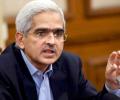
The increasing involvement of Big Tech in the financial system could give rise to concentration risk and there are potential spillovers, which call for closer attention, Reserve Bank of India (RBI) Governor Shaktikanta Das said on Tuesday. "...enormous amounts of consumer data is being generated and leveraged upon by a few entities (the so-called Big Tech) by virtue of their huge customer base. "Such developments raise concerns on concentration risk and potential spillovers as their level of engagement with the financial system strengthens in the years to come," Das said at the Global Fintech Fest 2022.

'We want to achieve overall profitability, and then we would go for an IPO.'
'Just the amount of work which is there just to become more and more successful in banking. For this to happen you need to have leaders who understand technology.'

In March this year, Worldline India launched Vabox (Voice Alert Box): merchants will now get instant audio alerts on the settlement of UPI (Unified Payments Interface) payments via QR codes in languages of their choice when customers check out. "They needn't worry whether the amount has been credited to their account," says Gulshan Pruthi, the firm's executive vice-president. The French payments giant will roll out 500,000 Vaboxes in the initial phase.


A merchant using the bank's merchant App, QR code, PoS or Payment gateways, across all segments, including electronics, apparel, grocery, stand to win assured cashback and prizes on volume build-up, EMI or digital transactions.

The Reserve Bank of India (RBI) on Wednesday announced to increase the policy repo rate by 50 basis points to 4.9 per cent, the second hike in five weeks aimed at quelling the inflation. The MPC vote was unanimous and has decided to keep stance withdrawal from accommodative, RBI Governor Shaktikanta Das said in a press conference on Wednesday. The decision was taken during a three-day meeting of the RBI's Monetary Policy Committee (MPC) to review the interest rates in the country. The MPC voted unanimously to increase the policy repo rate by 50 bps to 4.90 per cent," Das said.

'Given the emerging trends, it may be time for India to embrace digital banking,' notes Pradipta Bagchi.

As it readies for its initial public offering (IPO) later this year, digital payments firm Paytm is honing its strengths to remodel itself from being a payment wallet to becoming a financial services provider, and is working towards narrowing its losses, evident from its most recent Annual Report. Unlike many of its peers, Paytm has started expanding its merchant payment ecosystem. It has realised that though it can take the maximum share of the Unified Payment Interface (UPI) transactions, from a revenue generation point of view it will not have any impact.

'The Indian economy and the Indian financial sector today remain resilient and much better placed.'

Priyadarshini Maji evaluates the impact that payment banks are likely to have on your financial life.

For financial institutions, it will be an opportunity to provide better lending options. For instance, customers who pay their overdrafts on time will get access to more credit and probably at a cheaper rate.

'The financial sector's performance in the first two quarters was a revelation.' 'It clearly showed the clean-up had been done in the past one-and-a-half years and that capital brought in was significantly stronger.'

Here's what could be ahead for India: A $10-trillion economy by 2030-32, a Sensex at 1,00,000 by 2025, monthly GST revenues at Rs 2 trillion by 2024-25, 100 new unicorns by 2025, and poverty below 5 per cent by 2030, predicts R Jagannathan.

In a Facebook post on the second anniversary of demonetisation, Jaitley said in first four years of the National Democratic Alliance government, the number of income tax returns filers has gone up to 6.86 crore from 3.8 crore in May 2014.
